
When your child wakes up with a fever, complains about an earache, or simply isn’t acting like themselves, you want to know what to do next.
A pediatric sick visit gives your provider time to examine your child, understand how symptoms started and changed, and determine whether testing, treatment, or follow-up may be needed.
For sick child appointments in Sylacauga, Chelsea, or Birmingham near Valleydale Road, call your preferred office to discuss symptoms and current appointment availability.
Care When Your Child Is Sick
Start with the pediatric team that knows children.
Evaluation & Next Steps
An exam can help determine whether testing, treatment or follow-up is needed.
Three Convenient Offices
Call the location that works best for your family.
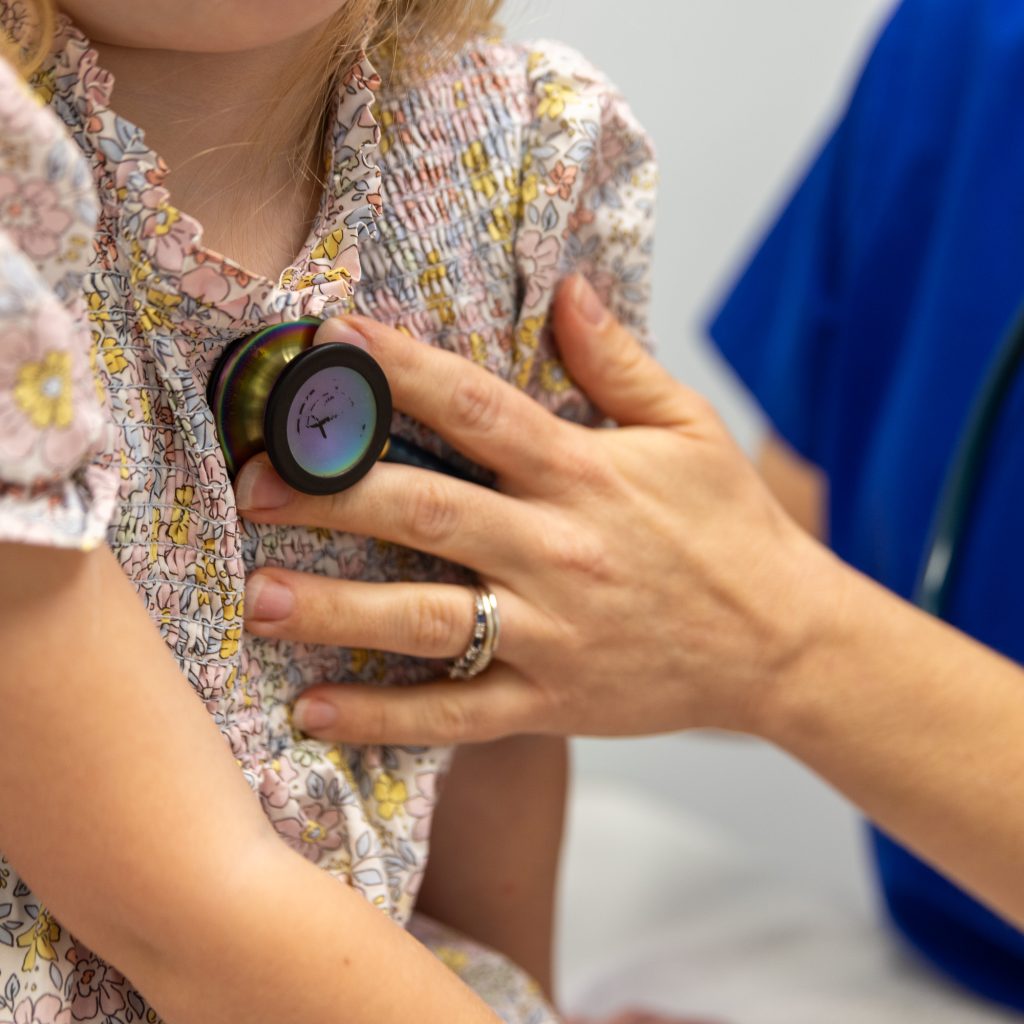


Not every new symptom requires an office visit, but a parent concern is a good reason to call.
Contact your pediatric office when symptoms are persistent, worsening or affecting how your child is eating, drinking, sleeping, breathing or behaving. Fever, ear pain, sore throat, cough, congestion, vomiting, diarrhea and new rashes are among the concerns that commonly lead families to contact a pediatrician.
Your child’s age and other symptoms matter. For example, fever in a young infant requires more prompt attention than the same temperature in an older child.
A fever often occurs while the body is responding to an illness, but your child’s age, temperature and other symptoms help determine when medical evaluation is needed.
Ear pain, drainage, trouble sleeping or fever may be associated with an ear infection or another ear concern that should be evaluated.
Sore throats are often caused by viral infections, but some children may need evaluation for strep or another cause.
Coughing, congestion or other respiratory symptoms may warrant a pediatric visit depending on severity, duration and how your child is breathing.
Sick visits can address many common childhood illnesses and new symptoms. What happens during the visit depends on your child’s age, symptoms, history and examination findings.
Your provider can consider your child’s age, temperature, other symptoms and overall appearance.
An examination of the ears can help determine whether an ear infection or another issue may be causing the discomfort.
Your pediatrician can examine the throat and determine whether testing for strep or another cause may be appropriate.
Respiratory symptoms can be evaluated in the context of your child’s breathing, fever, medical history and other findings.
Your provider can assess your child’s symptoms and discuss hydration, warning signs and appropriate follow-up.
New rashes, skin changes or other symptoms can be evaluated to help determine what may be causing them and what should happen next.

A fever, earache, or sore throat tells us what a child is experiencing, but not always what’s causing it. During a sick visit, your pediatric provider considers when symptoms started, how they’ve changed, your child’s medical history, and what the examination reveals.
Dr. David Hardy emphasizes that caring for a sick child sometimes requires more than one visit to understand the full picture. Young children cannot always explain exactly what they’re feeling, and the cause of an illness may not be immediately clear. He describes pediatric care as a partnership between the provider and family—working together to understand concerns, monitor changes, and determine the next steps.
That approach helps families understand not only what the provider finds during the appointment, but also what to watch for and when follow-up may be necessary.
Fever itself is a symptom rather than a diagnosis. How concerned you should be depends on your child’s age, how high the temperature is, how your child looks and acts, and what other symptoms are occurring. One important exception is a young infant: the American Academy of Pediatrics advises parents to call the pediatrician immediately when a baby 3 months old or younger has a rectal temperature of 100.4°F (38°C) or higher, even when the baby otherwise appears well.
Ear infections are common during childhood. Symptoms can include ear pain, fever, difficulty sleeping, decreased appetite or ear drainage. Younger children may simply become irritable or cry more than usual. Because ear symptoms can have different causes, an examination is the best way to determine what may be happening.
Many childhood sore throats are viral, while others are caused by group A strep or another infection. If your pediatrician is concerned about strep, testing may be appropriate. AAP guidance notes that a throat swab can be used to test for group A strep when the clinical picture warrants it.
Not every sick child needs laboratory testing. Sometimes a child’s symptoms, history and physical examination provide enough information for the provider to recommend care. In other situations, a test may help clarify the cause of an illness.
Depending on your child’s symptoms and the services available at your office, testing may be considered.
When strep throat is suspected, the provider may recommend a throat swab.
Testing for certain respiratory infections may be appropriate in some circumstances.
Some symptoms may lead your provider to recommend urine, blood or other laboratory testing.
If needed testing is not available through the pediatric office, your provider can explain the next step.
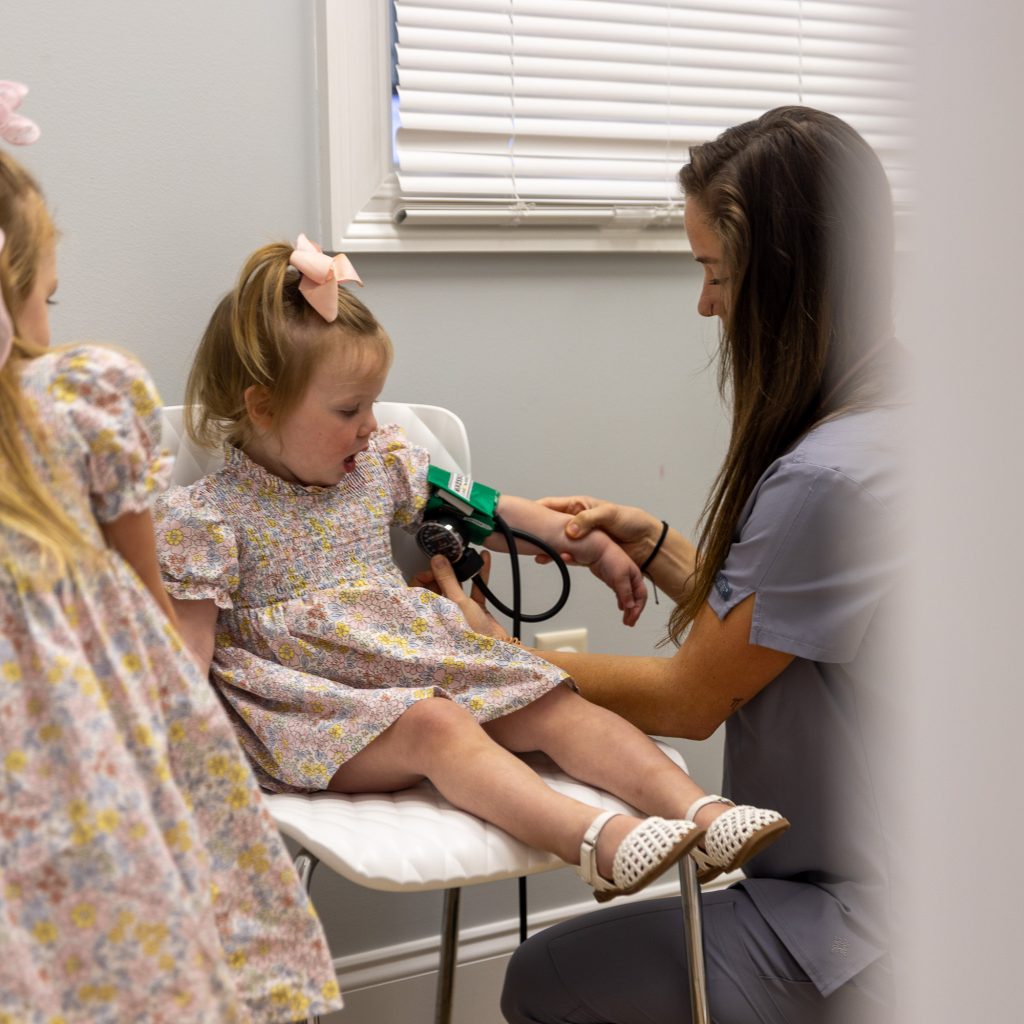

Not every childhood illness requires the same treatment. Many common illnesses are caused by viruses and do not benefit from antibiotics. Other conditions may require medication, additional evaluation, or closer follow-up.
Your pediatric provider can explain the findings, recommend appropriate care, and help you understand what to expect as your child recovers.
You do not need to arrive with every answer, but a few details can help your pediatric provider understand what has been happening and what has changed.
If your child has a fever, use a thermometer rather than estimating temperature by touch. The AAP notes that feeling the forehead or skin is not an accurate way to determine whether a baby has a fever.
Illness does not follow a schedule, and appointment availability can change throughout the day.
When your child needs a sick child appointment, call the office nearest you. The team can tell you what appointment options are currently available and whether your child’s symptoms require a different level of care.
Contact the office rather than assuming walk-in availability.
Let the staff know your child’s age and the symptoms that are prompting the call.
If your child is having significant breathing difficulty or another potentially serious symptom, say so at the beginning of the call.
The team can explain the appropriate next step based on current availability and the information you provide.

A routine pediatric sick visit is not a substitute for emergency care.
AAP guidance advises calling 911 for signs including severe difficulty breathing, a child who has passed out or stopped breathing, blue lips or face when not coughing, or breathing difficulty that began suddenly after a bee sting, new medicine or allergic food.
If your baby is 3 months old or younger and has a rectal temperature of 100.4°F (38°C) or higher, call your pediatrician immediately, even if the baby otherwise seems well.
AAP guidance recommends contacting the pediatrician right away when fever occurs with symptoms such as breathing difficulty, severe ear or throat pain, stiff neck, unexplained rash, repeated vomiting or diarrhea, unusual drowsiness or a child who appears very ill.
Follow the practice’s confirmed after-hours instructions. Do not use a website form, portal message or voicemail as a substitute for emergency care.
If your child has severe trouble breathing, becomes unresponsive, has blue lips or face, or you believe your child is experiencing a life-threatening emergency, call 911
Call when your child develops symptoms that concern you, particularly when symptoms are worsening, persistent or interfering with normal eating, drinking, sleep or activity. Your pediatric office can help determine the appropriate next step.
AAP parent guidance generally considers 100.4°F (38°C) or higher to be a fever, although the method used to take the temperature and the child’s age matter when interpreting a reading.
Call your pediatrician immediately if a baby 3 months old or younger has a rectal temperature of 100.4°F (38°C) or higher, even if there are no other symptoms.
Symptoms can include ear pain, trouble sleeping, fever, decreased appetite and sometimes ear drainage, but an examination is needed to determine whether an ear infection is actually present.
No. Many sore throats are caused by viral infections. Your pediatrician can consider your child’s symptoms and examination and determine whether strep testing is appropriate.
Not necessarily. Antibiotics treat certain bacterial infections but do not treat viral illnesses. Treatment should be based on the diagnosis and your child’s individual circumstances.
Call your office if you need to know whether a specific test is offered.
Bring your insurance information, medication list and useful details about when symptoms started, measured temperatures, treatments already tried and how your child has been eating, drinking and behaving.
Call the office nearest you for current sick-visit availability.
Follow the practice’s published after-hours instructions. If your child has severe difficulty breathing, becomes unresponsive, develops blue lips or face, or has another life-threatening emergency, call 911.
When something about your child’s illness has you concerned, call.
Be ready to tell us:
Whether it is fever, ear pain, a sore throat or another new concern, call the pediatric office nearest you and tell us what is going on.
With offices in Sylacauga, Chelsea, and Birmingham’s Valleydale area, families can choose the pediatric office most convenient for them. Select a location below to call, get directions, or view complete office information.
115 West Clay Street
Sylacauga, Alabama 35150
134 Foothills Parkway
Chelsea, Alabama 35043
1200 Providence Park, Suite 100
Birmingham, Alabama 35242

Providing compassionate comprehensive pediatric care for infants, children, and adolescents at three convenient locations in Alabama.
115 West Clay Street
Sylacauga, Alabama 35150
Mon – Thu: 8:00AM – 5:00pm
Fri: 9:00am – 12:00pm
Mon – Thu: 9:00AM – 4:00pm
Fri: 9:00am – 12:00pm
Mon – Fri: 9:00am – 4:00pm
© 2027 Summit Pediatrics. All Rights Reserved.
